
Traveling During Pregnancy: Safe Tips for a Smooth Journey

By Dr. Nutan Pakhare
Pregnancy is a special phase of life, and for many women, travel is still very much a part of it. Whether it’s a family vacation, a work trip, or a short getaway, traveling during pregnancy can be safe and enjoyable with the right planning and precautions. The key is to listen to your body, travel mindfully, and prioritize comfort over packed itineraries.
When Is the Best Time to Travel During Pregnancy?
The second trimester (14–27 weeks) is usually considered the safest and most comfortable time to travel.
First Trimester (1–13 weeks)
This phase can be physically exhausting. Nausea, fatigue, mood swings, and morning sickness are common, which can make travel uncomfortable. There is also a higher risk of miscarriage during early pregnancy, so extra caution is advised.
Second Trimester (14–27 weeks)
This is often called the “golden period” of pregnancy. Energy levels improve, nausea usually settles down, and the baby bump is still manageable. Most women feel more comfortable moving around during this phase, making it the ideal time for travel.
Third Trimester (28–40 weeks)
Travel can become tiring due to back pain, swelling, breathlessness, and reduced mobility. The risk of preterm labour also increases. Many doctors recommend avoiding long-distance travel during the final weeks of pregnancy.
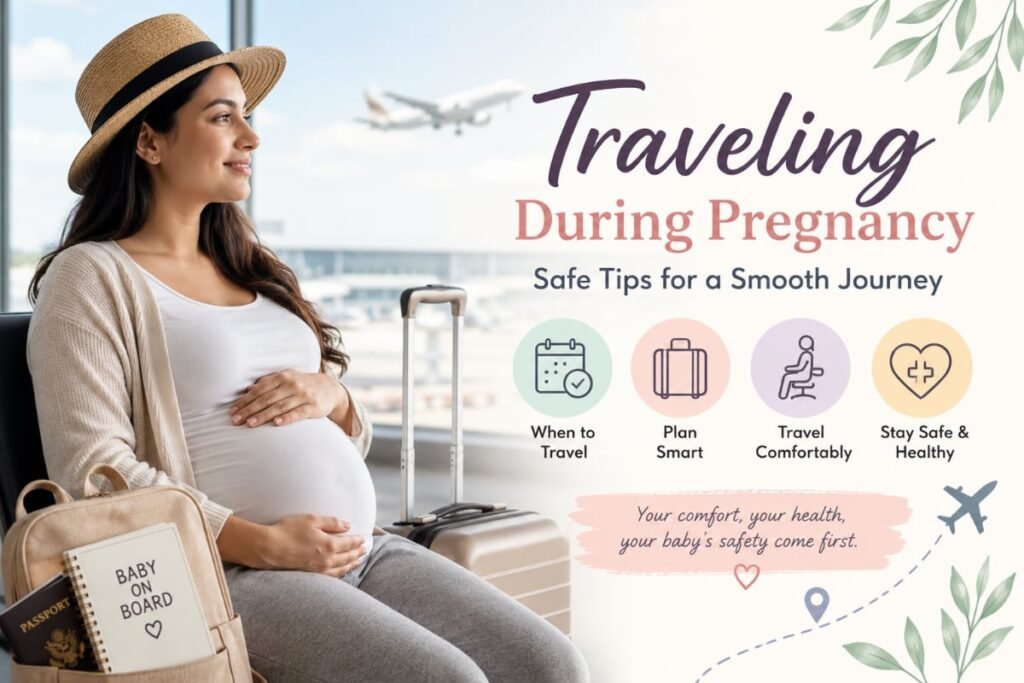
Which Season Is Best for Pregnancy Travel?
Spring and Autumn
These seasons are usually the most comfortable. Pleasant weather makes walking, sightseeing, and outdoor activities easier without the stress of extreme heat or cold.
Summer
Traveling in hot weather can lead to dehydration, fatigue, and overheating. If you’re traveling during summer, drink plenty of water, wear loose cotton clothing, and avoid stepping out during peak afternoon heat.
Winter
Winter travel is generally safe if temperatures are moderate. However, be careful on slippery or icy surfaces to avoid falls.
Things to Do Before Traveling
Consult Your Doctor
Before making travel plans, speak to your obstetrician. A quick check-up can help ensure everything is progressing normally, especially if you have conditions like gestational diabetes, high blood pressure, or a history of preterm labour.
Carry Your Medical Records
Keep digital or printed copies of:
- Prenatal reports
- Ultrasound reports
- Blood test results
- Emergency contact details of your doctor
Having these handy can save valuable time during emergencies.
Choose Your Destination Carefully
Pick destinations where healthcare facilities are easily available. Avoid places with:
- High infection risk
- Extreme climates
- High altitudes
- Malaria or dengue outbreaks
Plan Comfortable Transportation
- Air travel is usually safe up to 36 weeks in uncomplicated pregnancies.
- Train and car journeys can be more comfortable if they allow regular breaks.
- Avoid very long journeys without rest stops.
Important Precautions During Travel
Stay Comfortable in Transit
- Wear loose, breathable clothing
- Choose comfortable footwear
- Use the seatbelt correctly: below the belly and across the chest
- Drink water regularly
- Eat small snacks to maintain energy levels
- Walk and stretch every 1–2 hours to improve circulation and reduce the risk of blood clots
Avoid Overexertion
Pregnancy is not the time for adventure sports or physically demanding activities. Avoid:
- Scuba diving
- High-altitude trekking
- Heavy lifting
- Prolonged standing
Pack Smart
Your travel essentials should include:
- Prenatal vitamins and prescribed medicines
- Water bottle and healthy snacks
- Sunscreen and hat
- Comfortable footwear
- Basic first-aid supplies
Keep the Trip Relaxed
Don’t over-plan your days. Leave enough room for rest, naps, and slow mornings. Pregnancy travel should feel calming, not exhausting.
Staying Safe at Your Destination
Be Careful With Food and Water
Stick to freshly cooked meals and clean drinking water. Avoid raw, undercooked, or unhygienic food. Here’s few recommendations on mindful eating during pregnancy travel
Prioritize Rest
Maintain a healthy sleep routine and avoid pushing yourself too hard with sightseeing or shopping.
Locate Nearby Healthcare
Know where the nearest hospital or maternity centre is, just in case you need medical assistance.
After Returning From Travel
Once you’re back:
- Take 1–2 days to rest, especially after long journeys
- Continue your hydration and nutrition routine
- Watch for unusual symptoms like swelling, spotting, pain, or contractions
- Resume gentle exercise or walks to improve circulation and reduce stiffness
If anything feels unusual, contact your doctor immediately.
Why Traveling With Family Helps
Traveling with your partner or loved ones can make the experience safer and far more enjoyable. Having support means:
- Less physical strain
- Better rest management
- Help with luggage and planning
- Emotional comfort throughout the journey
A relaxed mother usually means a happier travel experience overall.
Final Thoughts
Travel during pregnancy doesn’t have to feel stressful or restrictive. With the right timing, good preparation, and mindful pacing, it can actually become a beautiful and refreshing experience. The goal is not to do more, but to travel more comfortably and consciously.
Listen to your body, take breaks when needed, and remember — your wellbeing matters just as much as the destination.
Looking for expert guidance during pregnancy? Check out this pre-postnatal yoga course with Dr Nutan to comprehensive knowledge.